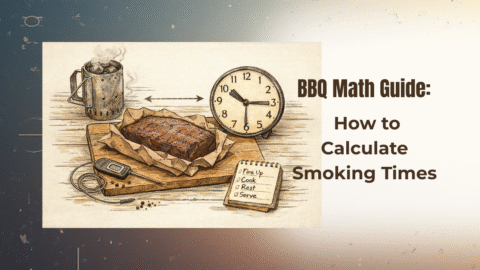
What is BBQ Math?
BBQ Math is the time-planning method pitmasters use to ensure smoked meats finish on schedule. By working backward from your serving time, you calculate fire-up time, cook time, stall allowance, and rest so brisket, pork butt, ribs, and chicken are ready exactly when you want to eat.
BBQ Math is the pitmaster’s system for serving smoked meat on time without stress. Instead of guessing when to light the pit, BBQ Math starts with your serving time and works backward through every phase of the cook.
Because large cuts like brisket and pork butt can stall, finish early, or take longer than expected, having a timeline removes uncertainty. Whether you are cooking for family, hosting a backyard party, or feeding a crowd, BBQ Math keeps you in control of the fire and the clock.
BBQ Math is not about exact minutes. It is about planning buffers, allowing meat to rest properly, and ensuring guests eat when you planned.
The BBQ Math Formula
Think of BBQ Math as a reverse countdown.
The Five Stages of BBQ Math
- Serving Time
The non-negotiable moment food hits the table. - Rest Time
Essential for tenderness and moisture. Bigger cuts need longer rests. - Cook Time
Estimated by cut, weight, and cooking temperature. - Stall Allowance
Built-in time for brisket and pork butt when temperatures plateau. - Fire-Up and Stabilization Time
Lighting the pit and letting temperatures settle before meat goes on.
Important: Trimming, seasoning, and brining happen before BBQ Math starts. BBQ Math only accounts for fire, cook, stall, rest, and serve.
BBQ Math Timing Examples (Real-World Scenarios)
Brisket BBQ Math Example (12 lb at 250°F)
- Serving time: 6:00 PM
- Rest: 2 hours (done cooking at 4:00 PM)
- Cook time: ~12 hours
- Fire-up and stabilization: 1 hour
BBQ Math Result:
Fire up the pit at 3:00 AM, serve at 6:00 PM
Pork Butt BBQ Math Example (8 lb at 250°F)
- Serving time: 6:00 PM
- Rest: 1.5 hours (done cooking at 4:30 PM)
- Cook time: 10 to 12 hours
- Fire-up: 45 minutes
BBQ Math Result:
Fire up between 4:45 and 5:15 AM, serve at 6:00 PM
Spare Ribs BBQ Math Example (250°F)
- Serving time: 6:00 PM
- Rest: 30 minutes
- Cook time: ~5.5 hours
- Fire-up: 30 minutes
BBQ Math Result:
Fire up at 11:30 AM, serve at 6:00 PM
Whole Chicken BBQ Math Example (300°F)
- Serving time: 6:00 PM
- Rest: 15 minutes
- Cook time: ~2 hours
- Fire-up: 30 minutes
BBQ Math Result:
Fire up at 3:15 PM, serve at 6:00 PM
Understanding the Stall (And Why It Matters)
Large cuts like brisket and pork butt often stall between 150 and 170°F internal temperature. During this phase, moisture evaporates from the surface, cooling the meat and slowing the cook.
Stall Planning Rules
- Always budget 1 to 3 extra hours
- Wrapping can shorten the stall but does not eliminate the need for buffer time
- Finishing early is better than finishing late
BBQ Math assumes the stall will happen. That is why it works.
BBQ Math Pro Tips from the Pit
Build in Buffer Time
Meat can rest longer. Guests cannot eat earlier than planned.
Rest Is Not Optional
Resting allows juices to redistribute and fibers to relax. Even chicken benefits from a short rest.
Track Every Cook
Use a BBQ cook notebook to record:
- Start times
- Finish times
- Rest duration
- Weather conditions
Patterns emerge fast.
Know Your Cooker
Offsets, kettles, pellet grills, and kamados all cook differently. BBQ Math improves as you learn your pit.
BBQ Math Quick Reference Chart
| Meat | Average Cook Time | Rest Time | Total Time (With Buffer) |
|---|---|---|---|
| Brisket (12 lb) | ~12 hours | 2 hours | 14 to 16 hours |
| Pork Butt (8 lb) | 10 to 12 hours | 1.5 hours | 12 to 14 hours |
| Spare Ribs | ~5.5 hours | 30 minutes | 6 to 7 hours |
| Whole Chicken | ~2 hours | 15 minutes | 2.5 to 3 hours |
Helpful Gear for Your Cook
- Digital probe thermometer (multi-probe preferred)
- Instant-read thermometer
- Chimney starter
- Butcher paper and foil
- BBQ cook notebook or printed BBQ Math sheet
Internal Links to more tips
Why BBQ Math Matters
BBQ Math is not complicated. It is disciplined planning. By working backward from your serving time and respecting rest and stall periods, you remove stress from the cook and gain confidence at the pit.
Great BBQ is not rushed. It is scheduled.
Let us know
How do you plan your cooks? Do you build in extra rest time or push closer to the deadline? Share how you use BBQ Math in the comments and help other pitmasters serve on time with confidence.