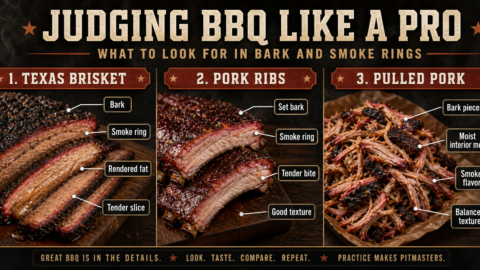
How to read the tray like someone who knows what matters
A lot of people know good BBQ when they taste it, but not everyone knows how to look at a tray and understand what they are seeing before the first bite.
That is part of the fun.
Once you spend enough time around Texas BBQ, you start noticing the details. The bark on a brisket slice. The color on a rib. The way smoke clings to the meat. The pink edge under the surface that everybody wants to photograph. Some of those details matter a lot to how the food actually eats. Some matter more to the eye than the bite.
Two of the most talked-about details in BBQ are bark and the smoke ring. They are related, but they do not carry the same weight.
If you want to judge BBQ a little more like a pro, here is what to look for, what matters most, and what should not fool you.
Start with the big idea: bark matters more than smoke ring
This is the most important truth in the whole article.
A smoke ring can look impressive, but it is mostly visual. It does not automatically mean the meat tastes better, smells smokier, or was cooked by a better pitmaster.
Bark is different.
Bark affects:
- Texture
- Seasoning
- Smoke impact
- Surface flavor
- Contrast in the bite
That means bark usually tells you more about how the BBQ will actually eat than the smoke ring does.
If you only remember one thing, remember this: smoke ring is nice to see, but bark is where a lot of the real action lives.
What bark really is
Bark is the dark, seasoned crust that forms on the outside of smoked meat over time. It develops from a mix of smoke exposure, rendered fat, seasoning, moisture evaporation, heat, and the natural proteins and sugars on the surface of the meat.
On a good brisket, bark should not just look dark. It should look set, textured, and full of flavor.
Good bark often brings:
- Peppery bite
- Smoke concentration
- Slight chew
- Surface texture that contrasts with tender meat underneath
That contrast is one of the reasons great brisket feels so satisfying.
What to look for in good bark
Look for bark that looks set, not wet
A strong bark should look developed and stable. It should not look mushy, greasy, or like the seasoning is sliding around on top of the meat.
You want a surface that looks like it has truly bonded to the brisket or rib, not one that still looks halfway through the process.
Look for texture, not just dark color
Very dark meat is not automatically great meat.
Sometimes people confuse “black” with “perfect,” but color alone does not tell the story. Good bark usually has visible texture and definition. It looks like a surface with structure, not like a flat painted layer.
Look for seasoning that seems balanced
On Texas-style brisket especially, bark often tells you a lot about the salt, pepper, and smoke balance. If the bark looks thick, gritty, and well-formed without appearing harsh or burnt, that is usually a good sign.
Think about how it will bite
The best bark adds texture without becoming hard, dry, or unpleasantly tough. It should support the bite, not fight it.
That is where experience starts to kick in. Great bark is not just dramatic. It is integrated into the whole piece of meat.
What bad bark can tell you
Bad bark is useful too, because it helps you spot when something went off.
Bark that looks burnt
If the outside looks bitter, patchy, or truly charred instead of deeply developed, that may mean the cook ran too hot, too dirty, or too long.
Bark that looks soft and washed out
This can happen when meat is wrapped too early, held too wet for too long, or never really got enough time to build a proper exterior.
Bark that separates from the meat
If it looks like the outer layer is flaking away from the slice, that can suggest the surface never settled the way it should have.
What a smoke ring actually tells you
Now for the part people love to post.
A smoke ring is the pink layer just under the outer surface of smoked meat, especially brisket, pork, and ribs. It forms when gases from combustion interact with myoglobin in the meat before the meat heats past a certain point.
The practical takeaway is simpler: a smoke ring shows that the meat had the right conditions to develop that visual pink edge early in the cook.
What it does not automatically prove:
- Better flavor
- Better tenderness
- Better smoke quality
- Better overall BBQ
That is why smoke ring should be appreciated, but not overvalued.
What to look for in a smoke ring
Look for a natural pink edge below the surface
A good smoke ring should look like a clean pink band beneath the bark, not like a neon stripe or an artificially colored layer.
Treat it as a supporting detail
A smoke ring is nice. It can absolutely make the meat look more appealing. But it should be one part of the picture, not the whole argument.
Do not assume bigger means better
A thick smoke ring does not automatically mean better BBQ. It may just mean the meat spent more time in conditions that promoted ring development. That can be interesting, but it is not a direct scoreboard.
How to judge brisket like a pro
Brisket is where a lot of people first start paying attention to bark and smoke ring, but the best judges look deeper than color alone. A strong slice of Texas brisket should tell a bigger story the second it lands on the board: how well the fat rendered, how the bark set, how the meat holds together, and whether the slice looks built for a clean, tender bite.
Start with the fat render
Rendered fat is one of the clearest signs that a brisket was handled well.
What you want to see is fat that looks soft, glossy, and almost buttery. On a great slice, the fat should not sit there looking stiff or chalky. It should appear creamy, slightly translucent, or lightly golden instead of stark white and firm.
If the fat still looks bright white, dense, or rubbery, that usually means it did not fully render. And if the fat did not render well, the bite usually will not feel as luxurious as it should.
Look at how the slice bends
A properly cooked brisket slice should have some give to it.
When you pick it up, it should bend easily and drape naturally instead of staying stiff like a board. It should feel relaxed, not tight. A good slice can hang over your finger without immediately snapping apart, but it also should not feel mushy or like it is falling to pieces under its own weight.
That balance matters. You want a slice that is flexible and tender while still holding together.
Check the bark
Bark is still one of the first things worth judging.
A good brisket bark should be dark, set, and deeply textured. It should look rich and developed, with that deep mahogany-to-near-black color that signals smoke, seasoning, and time. It should never look gray, washed out, or truly burnt.
The best bark adds contrast to the bite. It brings pepper, smoke, and structure without turning harsh or brittle.
Treat the smoke ring as a visual clue, not the final verdict
A clean smoke ring can absolutely make a brisket slice look more appealing.
On a strong slice, it often shows up as a thin, lively pink band just beneath the bark. It is one of those details that people notice immediately, and for good reason, it looks great.
But it is still mostly visual. A nice smoke ring does not automatically mean better flavor or better texture. It is a supporting detail, not the deciding factor.
Look for moisture, not just shine
A brisket slice should look juicy, but not wet in a sloppy way.
Good brisket often glistens because rendered fat is still sitting naturally in the slice. That is different from meat that looks dry or meat that looks like it is only surviving because it is sitting in liquid.
A good slice should look alive and supple. It should never look like it needs to be sawed through, and it definitely should not look dry around the edges.
Study the meat structure
One of the best signs of a strong brisket slice is that it keeps its shape while still feeling tender.
That means the slice does not crumble apart the second you touch it, but it also does not resist when you pull it gently. A good brisket slice should have enough structure to stay together on the board and enough tenderness to separate cleanly when bitten or lightly tugged.
That is one of the clearest signs that the collagen broke down properly without the brisket going too far.
Do not ignore grain direction
Even a well-cooked brisket can eat badly if it is sliced wrong.
A proper slice should be cut against the grain so the meat feels tender instead of stringy. If the grain is working against the bite, readers may blame the cook when the real issue is the knife work.
That is why judging brisket well means looking at the slice itself, not just the cook behind it.
What a great brisket slice should make you think
When all of those pieces come together, bark, fat render, bend, moisture, and structure, the slice should look balanced. Not dramatic in only one way. Not just black bark. Not just a pink smoke ring. Not just a floppy slice for show.
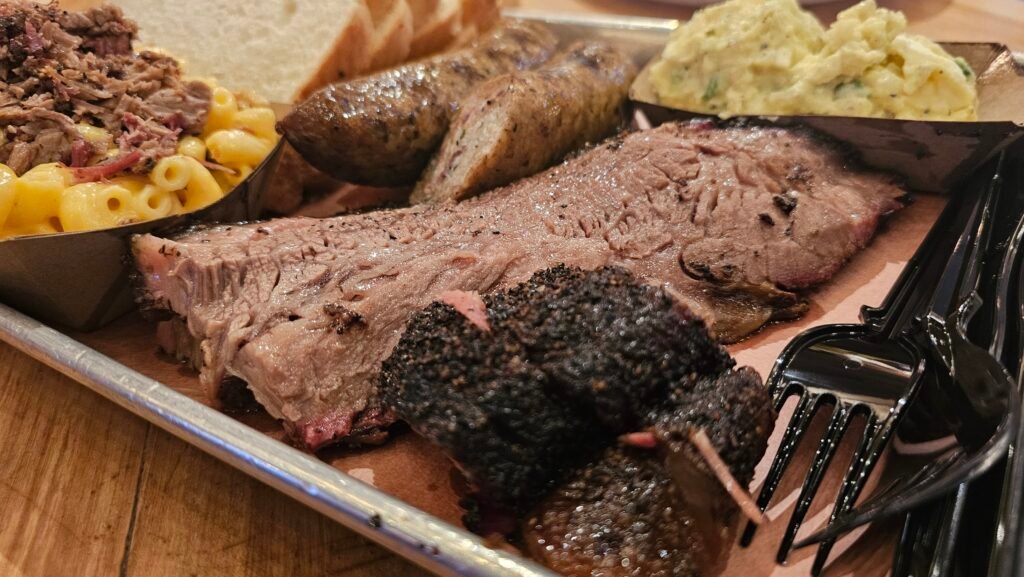
A really good brisket slice should make you think:
- The bark looks set and flavorful
- The fat looks soft and fully rendered
- The slice bends without breaking apart
- The smoke ring looks natural
- The meat holds together, but not too tightly
- The whole bite looks like it is going to eat clean and tender
That is when you know you are looking at more than a pretty photo. You are looking at brisket that was cooked with control.
How to judge ribs like a pro
Ribs are a little different because bark is usually lighter and the smoke ring is often easier to see on the cut edge.
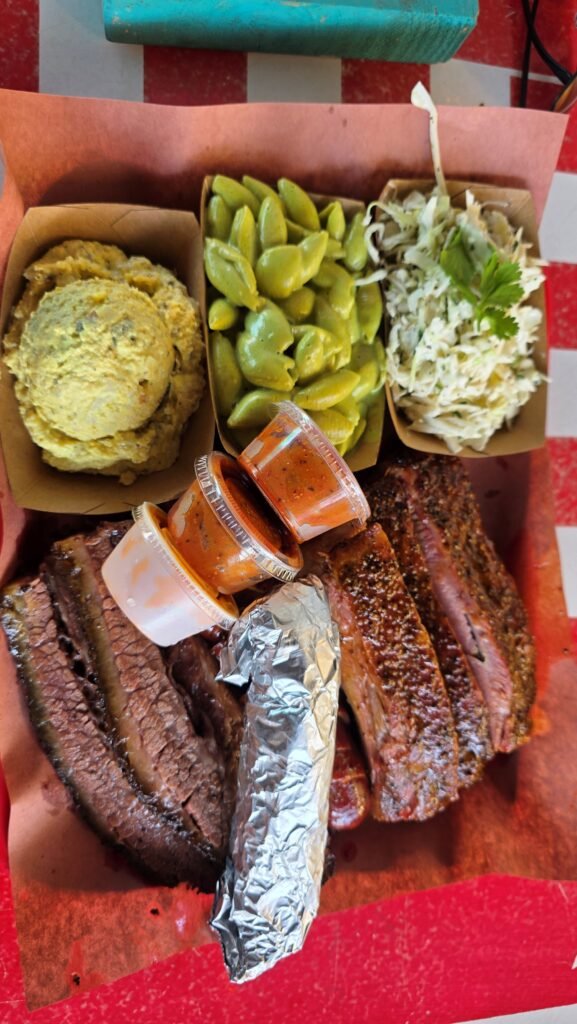
With ribs, look for:
- Surface seasoning that looks set
- Color that suggests smoke and caramelization, not burnt glaze
- A visible pink edge if cut cleanly
- Meat texture that looks tender but not falling apart into mush
A good rib should look like it still has some structure. Competition-style fall-off-the-bone may sound impressive, but a lot of BBQ people prefer a cleaner bite with some integrity still in the meat.
How to judge pulled pork and pork shoulder
With pulled pork, the bark often gets mixed into the interior meat, so you are judging a little differently.
Look for:
- A good mix of dark exterior meat and lighter interior meat
- Bark pieces that add flavor and contrast
- Moisture without looking greasy
- Smoke ring on sliced portions if the shoulder is cut before pulling
Here, bark is still doing major work because it brings the strongest flavor into the pile.
The biggest mistake casual eaters make
The most common mistake is treating BBQ like a photo contest.
People see a vivid smoke ring and assume they are looking at elite barbecue. Sometimes they are. Sometimes they are just looking at a pretty slice.
The smarter approach is to ask:
- How does the bark look?
- How does the fat look?
- How does the meat hold itself?
- Does the smoke ring support the visual, or is it the only thing the slice has going for it?
That shift is what starts to make someone a more informed eater.
How to talk about BBQ without sounding fake
You do not need to walk into a joint sounding like a judge. You just need to know what matters.
Good ways to describe what you notice:
- “The bark on this brisket is excellent.”
- “The smoke ring looks great, but the bark is what really stands out.”
- “I like the texture on the outside of these ribs.”
- “This pulled pork has a good mix of bark and interior meat.”
- “The bark adds a lot to the bite.”
That sounds grounded. It says you are paying attention without trying too hard.
EBBQ FAQ
Is the smoke ring the most important part of good BBQ?
No. A smoke ring is mostly visual. It can make the meat look appealing, but it does not guarantee better flavor, better smoke, or better tenderness.
Why is bark more important than the smoke ring?
Bark affects flavor, texture, seasoning, and the overall bite. It plays a much bigger role in how the BBQ actually eats.
What should brisket bark look like?
It should look set, textured, and well-developed, with strong surface character but without looking bitter, flaky, or burnt.
Can BBQ have great bark and only a small smoke ring?
Yes. And that can still be outstanding BBQ.
What should I look for first on a BBQ tray?
Start with bark, fat rendering, and overall texture. Then enjoy the smoke ring as a visual bonus.
Final thoughts
Learning how to judge BBQ does not mean becoming picky for the sake of it. It means understanding why one tray stands out more than another.
A smoke ring is fun to see and worth noticing. Bark is where a lot of the real story lives.
So next time you look at a brisket slice or a rack of ribs, do not stop at the pink edge. Look at the crust. Look at the texture. Look at how the meat and bark work together.
That is where a casual eater starts becoming a real connoisseur.
EBBQ Resources
- The Ultimate Guide to Brisket Anatomy, Trimming & Slicing
- How to Take Better BBQ Tray Photos: BBQ Photography Tips for Beginners
- Texas BBQ Ordering Tips: What to Ask for at the Counter Without Being That Guy
- The Art of the Spread: How to Build the Perfect Texas BBQ Tray