You can learn a lot about a Texas BBQ joint before you ever take a bite.
The line tells you how people move. The pit smell tells you what kind of day the fire is having. The cutting block tells you what the house takes seriously. And when your turn comes, the way you order can shape the whole tray.
Most Texas BBQ menus look simple at first glance: brisket, ribs, sausage, maybe pulled pork or a special. But regulars know the real nuance starts at the counter. This is where you decide between moist and lean brisket, ask whether beef ribs are available, or find out which sausage is worth making room for on the tray.
This is not about trying to sound important or turning a busy cutting board into your personal tasting session. It is about learning how to order clearly, ask smart questions, and read the room so you get a tray that matches what you actually want.
If you have ever wondered what to ask for at a Texas BBQ counter, this guide will help you order with more confidence and a lot more respect.
What it really means to order like an insider
Ordering like an insider is not about secret passwords, hidden hacks, or trying to game the system.
It is about understanding a few key terms, knowing the difference between cuts, and recognizing when a question is welcome versus when it is better to keep the line moving. At some joints, the cutter is happy to talk you through what looks best. At others, the place is built for speed, and the best move is to order cleanly and trust the house.
The goal is simple: know enough to make good choices without becoming the person everybody behind you remembers for the wrong reason.
Start with brisket: moist vs lean
If you learn one piece of Texas BBQ counter language, make it this one.
A whole brisket has two main muscles: the point and the flat. Those two sections eat differently, and most good joints will let you choose which side you prefer.
Moist brisket
Moist brisket usually comes from the point. It has more fat, more marbling, and a softer, richer bite. If you like buttery texture, deeper rendered fat, and slices that feel more decadent, this is usually the move.
Lean brisket
Lean brisket usually comes from the flat. It has less fat, a slightly firmer bite, and often delivers a cleaner beef-forward flavor. When cooked well, it is still tender and satisfying, just less rich than moist brisket.
What to say at the counter
Keep it simple:
- “I’ll do a half pound of moist brisket.”
- “Can I get lean brisket?”
- “Can you do a mix of moist and lean?”
That last option is especially good if it is your first visit and you want to understand how the house handles both sides of the brisket.
Can you ask for outside cut or extra bark?
Sometimes, yes. Sometimes, no. This is where etiquette matters.
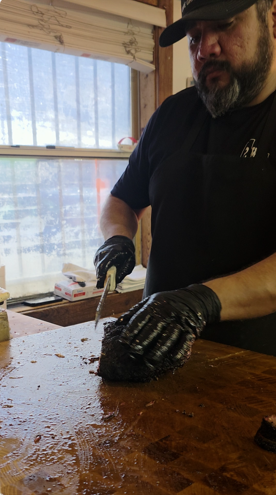
The outside cut is the end piece with the most bark exposure. It can be one of the most flavorful bites on the whole brisket, especially if you love peppery crust, smoke, and texture. But there are only so many of those slices to go around, and not every joint is set up to honor highly specific requests during a rush.
If the line is calm and the cutter seems conversational, a polite question is fine:
- “If you have an outside cut, I’d love that.”
- “I like a barkier slice, what would you recommend?”
If the place is slammed, this is probably not the moment. Read the pace, order clearly, and let the cutter keep moving.
Are burnt ends a thing in Texas BBQ?
Sometimes, but not everywhere.
Burnt ends are more strongly associated with Kansas City barbecue, where they are a standard menu item in many places. In Texas, some joints may offer them occasionally, some may treat them as a special, and others may not do them at all.
That means the better question is not “Where are the burnt ends?” It is:
- “Do y’all do burnt ends here?”
- “Any burnt ends available today?”
That keeps the tone curious instead of demanding. If the answer is no, that is normal. If the answer is yes, you just found a bonus.
What to ask for when ordering ribs
Ribs are one of the best places to ask a smart question, especially if the joint offers more than one kind or if beef ribs are not an everyday item.
Ask whether beef ribs are available
At many Texas BBQ joints, beef ribs are limited, sold only on certain days, or gone early. If you are hoping for one, it is worth asking up front.
Try:
- “Are beef ribs available today?”
- “Do y’all still have beef ribs?”
That is a practical question, not a fussy one.
Ask which ribs are eating best right now
If the line is manageable, this is one of the best counter questions you can ask.
Try:
- “Which ribs are eating best right now?”
- “Would you go pork ribs or beef ribs today?”
That invites the cutter to guide you without forcing a custom request.
Do not make size the whole conversation
Asking for the absolute biggest rib in the building can quickly cross into “that guy” territory, especially if the board is moving fast. If you prefer a meatier rib, phrase it in a softer way:
- “If you have a meatier one, I’d take that.”
- “Which one would you pick?”
That gives the cutter room to help without making the interaction awkward.
What to ask for when ordering pork
Not every Texas BBQ joint leans hard into pork, but where it is offered, there is often more nuance than people expect.
Ask about pork specials
Pulled pork may be standard, but pork belly, pork steak, smoked chops, or a daily pork special can be where some of the most interesting bites live.
Try:
- “Any pork specials today?”
- “Is there a pork item you’d recommend over the standard pulled pork?”
That is an easy way to uncover something better than your default order.
Ask for texture, not just the name of the cut
This is one of the best ways to sound informed without sounding difficult.
If you like bark and texture, you can ask:
- “I like a little more bark and texture, what would you point me toward?”
- “If I’m doing pulled pork, can you mix in some darker outside pieces?”
Some places can do that. Some will not. Either answer is fine.
Order based on how you plan to eat it
This is one of the most useful things a lot of people never think to mention.
If you are building sandwiches, tacos, loaded potatoes, or ordering for leftovers, say so. That helps the staff steer you toward what works best.
Try:
- “I’m making sandwiches for a group, what pork would you recommend?”
- “What reheats well if I’m taking some home?”
That is often a better question than trying to micromanage the cut.
What to ask for when ordering sausage
Sausage may be the easiest category to ask questions about because it usually does not slow the line the way brisket requests can.
Ask which sausage is the house specialty
If the joint has more than one link, ask which one they are most known for.
Try:
- “Which sausage should I not miss?”
- “Which one is your signature link?”
That is a great beginner question and an easy conversation starter.
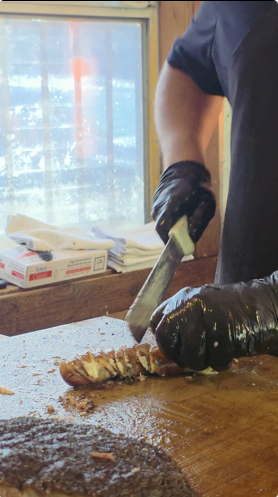
Ask whether anything is made in-house
House-made sausage often tells you a lot about a joint’s identity. If there are multiple links available, this can help separate a standard add-on from something more distinctive.
Try:
- “Which sausage is made in-house?”
- “Do y’all make all the links here?”
Ask about seasonal or rotating links
Jalapeño cheddar, garlic-heavy links, special game sausage, or limited-run flavors may not always be the star of the board, but they can be worth asking about.
Try:
- “Any special sausage today?”
- “Do you have a rotating link that’s not always on the board?”
Daily specials are one of the best insider moves
If there is one category that really feels like “if you know, you know,” it is the special board.
A lot of joints run limited meats or off-menu items that regulars learn to ask about: beef ribs, smoked pork chops, turkey breast, barbacoa, pork belly, or a dessert that only shows up on weekends.
You do not need to overthink it. Just ask:
- “Anything special today I should know about?”
- “What’s the move if it’s my first time here?”
- “Is there something y’all do that regulars always get?”
That kind of question often gets you better guidance than asking for the most internet-famous item on the menu.
How to talk to the cutter without slowing down the line
This is where Texas BBQ etiquette really comes into play.
The cutter has one of the hardest jobs in the building. They are slicing, portioning, answering questions, keeping the pace up, and acting as the final gatekeeper between the pit and the tray. The fastest way to have a better counter experience is to respect that.
Good times to ask a couple questions
A little conversation is usually fine when:
- The line is short.
- The cutter is not visibly rushed.
- You are early in service.
- The staff seems open and conversational.
- The joint feels like the kind of place where the cutting board is part of the experience.
Times to keep it simple
You should probably just order and move when:
- The line is wrapped out the door.
- Tickets are flying.
- The cutter is moving fast and not looking up much.
- The room clearly values speed over conversation.
- Staff looks buried.
A smart BBQ fan knows that etiquette is not just what you ask. It is also knowing when not to ask.
Phrases that work well at the counter
If you want to sound informed without sounding demanding, these are the kinds of phrases to use:
- “What looks best right now?”
- “If it were your tray, what would you get?”
- “Which sausage should I not miss?”
- “Are beef ribs available today?”
- “I like more bark, what would you recommend?”
- “Can I do a mix of moist and lean?”
- “Anything special on today I should know about?”
These work because they show interest, not entitlement.
Questions and behaviors to avoid
There is a difference between being curious and being a problem.
Avoid things like:
- Asking for every slice to be cut a certain way during a rush
- Demanding only the “best” pieces
- Acting annoyed if a place does not do your preferred style
- Asking the cutter to go digging for something not on the board
- Holding up the line while you debate every meat
- Treating online hype like it is a secret handshake
The best counter interactions feel easy, respectful, and quick.
Common mistakes people make at the BBQ counter
Even experienced diners can make the counter harder than it needs to be. A few small mistakes can change the whole tone of the interaction.
Taking too long to decide
If you wait until you reach the block to start reading the menu and thinking through every option, the pressure ramps up fast. Have a rough plan before it is your turn, especially at busy joints.
Asking detailed custom questions during peak rush
There is nothing wrong with asking a thoughtful question, but timing matters. If the staff is buried and the line is deep, keep it straightforward and trust the house.
Treating every joint like it works the same way
Some places welcome back-and-forth. Others run like a machine. Part of Texas BBQ etiquette is recognizing the style of the place you are in.
Assuming hidden items are guaranteed
Not every joint has off-menu specials, burnt ends, trimmings, or custom-cut options. Ask politely, but do not assume.
Talking to the cutter like they are a vending machine
A little respect goes a long way. Make eye contact, speak clearly, and remember that you are dealing with a person handling a craft, not just filling an order.
If it is your first time, keep your order simple and smart
If you are new to a particular joint, a good first order usually includes:
- Brisket, moist, lean, or a mix
- One rib option
- One sausage option
- One or two classic sides
- Whatever special the house is proud of that day
This gives you a read on the basics without overloading the tray or the conversation.
Texas BBQ ordering etiquette comes down to respect
The best BBQ fans are not the ones who know the most terms. They are the ones who know how to use them well.
Ordering like an insider is not about showing off. It is about knowing the difference between moist and lean, understanding when to ask about beef ribs or house sausage, and recognizing when the best move is to order cleanly and let the house do what it does best.
That is the real rhythm of the counter.
Learn it, respect it, and your tray usually gets better.
Frequently asked questions about ordering at a Texas BBQ joint
What does moist brisket mean in Texas BBQ?
Moist brisket usually comes from the point of the brisket and has more fat, more marbling, and a richer bite than lean brisket.
What is the difference between moist and lean brisket?
Moist brisket is fattier and softer. Lean brisket comes from the flat and has less fat with a firmer, more beef-forward texture.
Is it rude to ask for a specific brisket cut?
No, not if you ask simply and respectfully. The bigger factor is timing. During a rush, keep it straightforward.
Can you ask for burnt ends at a Texas BBQ joint?
You can ask, but not every Texas BBQ joint offers them. Some do them occasionally, some list them as specials, and many do not serve them at all.
What should I ask for if I like more bark?
A polite question like “I like a barkier slice, what would you recommend?” usually works better than making a highly specific demand.
Is it okay to ask which meat is best that day?
Yes. That is one of the best questions you can ask, especially when phrased simply.
What should I ask when ordering sausage?
Ask which sausage is the house specialty, whether anything is made in-house, or if there is a special or rotating link that day.
How do I order without slowing down the line?
Know your basics before it is your turn, keep your questions short, and pay attention to how busy the counter is. If the place is slammed, order clearly and keep it moving.
Show us your best insider order
Got a go-to counter move that paid off? Found a joint with a killer house sausage or a beef rib worth planning a day around? Log it in your BBQ Passport and let the community know what was actually worth ordering.
That is the kind of tip people remember.
Explore More
- BBQ Joint 101 – Full list of BBQ Joint guides
- BBQ glossary – Catch up on Texas BBQ Terms
- A beginner Texas BBQ ordering guide
- BBQ Passport, Log what you ordered and what worked best
- BBQ Capital of Texas – Lockhart, TX
Helpful gear for your trip
A little preparation can make a Texas BBQ stop a lot smoother, especially if you are dealing with a long line, warm weather, or taking food back on the road.
You do not need much, but a few basics can help:
- Phone charger powerbank for long lines
- Portable Chairs
- Wet Wipes for clean up
- Reusable water bottle
- Insulated tote for leftovers
- Exploring BBQ Travel Shirt
The idea is not to overpack. It is just to make the trip a little easier, a little cleaner, and a lot more comfortable.