Why Texas BBQ Lines Matter
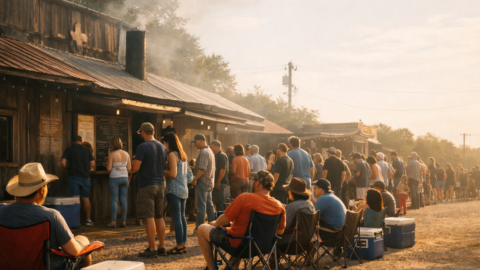
For someone new to Texas barbecue, a line wrapped around a building at 10:00 a.m. can look irrational. For those who chase great barbecue, it is part of the ritual.
As you move from casual diner to intentional joint hunter, learning how to read a BBQ line becomes a real skill. It helps you decide when to arrive, what kind of wait you are signing up for, and how likely it is that the meats you want will still be available when you reach the counter.
At many respected Texas barbecue joints, the line is not just a byproduct of popularity. It is tied directly to how the food is made and served, with limited quantities, sliced-to-order service, and a menu that lasts only as long as the meat does.
A smart BBQ fan does not just ask, “How long is the line?” They ask, “What is this line telling me?”
When to Show Up at Popular BBQ Joints
The most common mistake is assuming opening time is the ideal arrival time. At many top-tier Texas BBQ spots, that is already too late.
Weekend lines require strategy
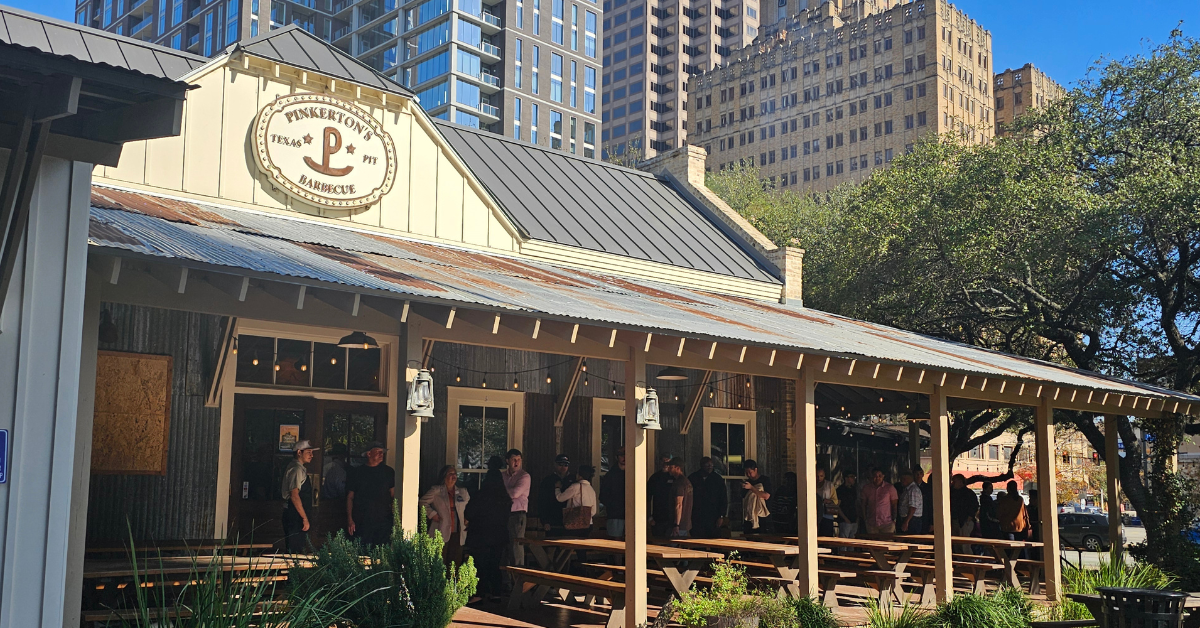
At high-demand joints, lines often form well before the doors open. The more popular the joint, the earlier you should consider arriving, especially on Saturdays.
Weekdays can help, but not always
Weekdays are often more forgiving, but not guaranteed. Some joints are only open a few days a week, which can make a Tuesday feel like a Saturday.
Read the line, not just the clock
A line of 25 people can mean very different wait times depending on how efficiently the operation runs. Always observe before committing.
How to Estimate a BBQ Line Wait Time
Not all BBQ lines move the same.
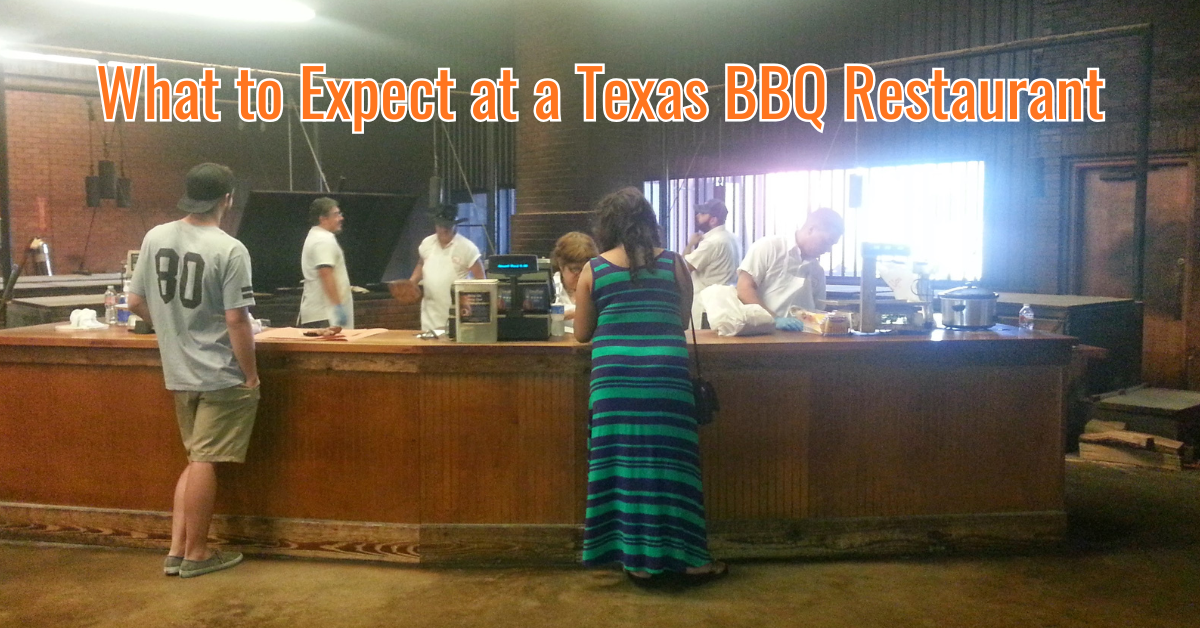
Watch the slicing block
If the cutter is moving steadily and staff are preparing orders before customers reach the front, the line is likely efficient.
If orders slow down at the counter or customers are deciding late, expect delays.
Look for staff communication
Well-run joints often:
- Walk the line with updates
- Call out low-stock meats
- Take partial orders early
This usually means a smoother experience.
Large orders change everything
One large group order can slow a line more than dozens of individuals. Pay attention to what people are ordering ahead of you.
How to Predict Sell-Out Risk
This is where reading the line becomes critical.
The menu narrows as the day goes on
At many Texas BBQ joints, items like brisket, beef ribs, and specialty meats are limited. Sausage and turkey often last longer.
Listen for early warnings
If staff mention they are low on brisket or specific items, adjust expectations immediately.
Always have a pivot
Experienced BBQ fans know:
Sometimes the second-choice meat at a great joint is better than the “best” item at an average one.
Famous Texas BBQ Lines (Real-World Examples)
These real-world line experiences show how different Texas BBQ joints create different types of wait dynamics.
Franklin Barbecue Line (Austin, TX)
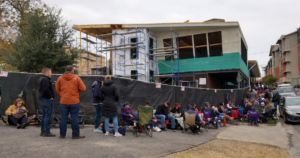
Franklin Barbecue is one of the most well-known BBQ lines in Texas. The wait is part of the experience, with many people arriving hours before opening to secure a spot.
The line here is less about uncertainty and more about commitment. If you arrive early enough, the reward is almost guaranteed, but that early arrival is part of the culture.
EBBQ links:
Explore more BBQ in Austin
Adopt our Bucket List: Modern Central Texas BBQ Corridor (Austin, Taylor)
Snow’s BBQ Line (Lexington, TX)
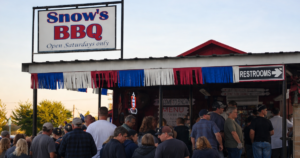
Snow’s BBQ operates on a completely different rhythm. Open only on Saturdays, it creates a destination-driven line where timing is everything.
Here, the line reflects both scarcity and anticipation. Arriving late is not just a longer wait, it can mean missing out entirely.
EBBQ links:
Explore More BBQ In Lexington
Adopt our Bucket List: Aggieland to Snow’s Smokehouses (College Station, Lexington)
Leroy and Lewis Line (Austin, TX)
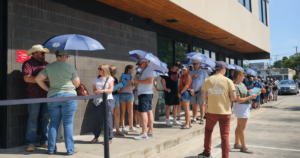
Leroy and Lewis represents modern Texas barbecue, where demand is high but operations continue to evolve.
Lines here may not always be as extreme as legacy joints, but they still require awareness. The key is understanding how newer-style service and menu changes affect timing and availability.
EBBQ links:
Texas BBQ Road Trips: Start Your Journey
Document Your BBQ Journey Free
The Culture of Waiting in a BBQ Line
For experienced BBQ fans, the line is not wasted time, it is part of the experience.
The line is social
You will hear recommendations, compare past stops, and learn what others are ordering. The line becomes part of the BBQ community.
Preparation improves the experience
For longer waits, regulars often bring:
- Water
- Sun protection
- Folding chairs
Always read the environment and respect the setup of the specific joint.
BBQ Line Etiquette: Don’t Be “That Guy”
No line cutting
BBQ lines operate on fairness. Cutting the line is one of the quickest ways to upset a crowd.
Know your order
Have your order ready before reaching the block. The people behind you are hungry.
Be reasonable with group spots
Holding a place for one person is different from holding spots for a large group.
Stay aware
Keep chairs, coolers, and personal items from disrupting the flow of the line.
What Experienced BBQ Fans Understand
A long line does not automatically mean great barbecue, but it often signals something worth paying attention to.
The real skill is understanding what kind of line you are looking at:
- Efficient and worth the wait
- Slow and unpredictable
- Or driven by hype rather than consistency
Learning to read the difference is part of becoming a more experienced BBQ traveler.
The Reward Is in the Wait
Part of what makes that first bite hit so hard is everything leading up to it, the smell of smoke, the anticipation, the conversations, and the moment you finally reach the block.
At its best, the line is not something standing between you and the food. It is part of the story.
Track your stops, log your visits, and document your BBQ journey with the BBQ Passport: