What wood actually does in Texas BBQ
For beginners, smoke feels like a single flavor.
But once you spend more time around Texas BBQ, you start to realize something important.
Smoke is not just heat. It is seasoning.
Just like salt and pepper, the type of wood burning in the pit shapes:
- Flavor
- Aroma
- Bark development
- Overall identity of the meat
In Texas, wood choice is not random. It is part of the story behind every BBQ joint.
Quick answer: What wood is used in Texas BBQ
The most common Texas BBQ wood types are post oak, mesquite, hickory, and pecan. Post oak is the Central Texas standard for brisket, mesquite delivers a stronger flavor in West Texas, hickory adds a savory profile often used with pork, and pecan provides a milder, slightly sweet smoke.
Post oak, the foundation of Central Texas BBQ
The profile
Mild, clean, and balanced smoke
Where you will find it
Lockhart, Austin, Taylor, and across Central Texas
Why it works
Post oak is the backbone of classic Texas BBQ.
It provides:
- Steady heat
- Clean smoke
- A flavor that supports the meat instead of overpowering it
That is why it pairs perfectly with:
- Brisket
- Beef ribs
- Simple salt and pepper rubs
What to look for
A subtle smoke flavor that sits in the background, not one that dominates the bite.
If you want to understand this style better, explore
Texas BBQ Road Trips: Start Your Journey
Mesquite, bold and unmistakable
The profile
Strong, earthy, and intense
Where you will find it
West Texas and ranch-style cooking
Why it works
Mesquite burns hot and produces a powerful smoke.
It creates:
- Bold flavor
- Faster cooking environments
- A more rugged BBQ profile
The challenge
Mesquite can turn bitter if not managed carefully.
That is why it is often used for:
- Steaks
- Shorter cooks
- Direct-fire cooking
What to look for
A stronger smoke presence that you notice immediately in both aroma and taste.
Hickory, the savory classic
The profile
Strong, rich, and slightly nutty
Where you will find it
East Texas and Southern-style BBQ influences
Why it works
Hickory brings a deeper, more savory flavor that many people associate with bacon or smoked ham.
It pairs well with:
- Pork shoulder
- Ribs
- Chicken
Intermediate tip
Some pitmasters blend hickory with oak.
This gives you:
- Consistent heat from oak
- Added flavor depth from hickory
Pecan and fruitwoods, the softer side of smoke
The profile
Mild, slightly sweet, and smooth
Where you will find it
Across Texas, often blended with oak
Why it works
Pecan is more subtle than hickory and less intense than mesquite.
It works well with:
- Turkey
- Pork
- Chicken
Fruitwoods like apple and cherry are less common in traditional Texas brisket pits, but they are used for:
- Ribs
- Poultry
- Adding a slightly sweet finish
What to look for
A lighter smoke flavor that enhances the meat without adding heaviness.
The Texas BBQ wood cheat sheet
- Post oak → mild, clean smoke → best for brisket and beef → Central Texas
- Mesquite → very strong smoke → best for steaks and fast cooks → West Texas
- Hickory → savory and bold → best for pork and chicken → East Texas
- Pecan → mild and slightly sweet → best for poultry and pork → statewide
How to recognize wood flavor at a BBQ joint
The next time you visit a BBQ spot, take a moment before you order.
Look at:
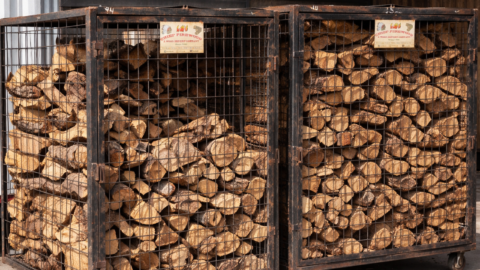
- The woodpile near the pit
- The smell in the air
- The intensity of the smoke aroma
Then compare it to what you taste on the tray.
If you are still learning how to navigate a BBQ line, this guide helps
Mastering the Art of Ordering at a Texas BBQ Restaurant
Why wood choice matters more than you think
Wood is one of the biggest factors that separates one BBQ joint from another.
Two places can cook the same cut of brisket at the same temperature and still taste completely different because of the wood.
Understanding this helps you:
- Choose where to go next
- Understand regional differences
- Appreciate the craft behind the pit
If you want to go deeper into how BBQ works at the restaurant level, explore
The Ultimate Guide: What to Expect at a Texas BBQ Restaurant
Final thought, learn to taste the smoke
The next time you take a bite of brisket, pause for a second.
Ask yourself:
- Is the smoke strong or subtle
- Does it hit immediately or build slowly
- Does it support the meat or dominate it
That is how you start to understand BBQ at a different level.
Continue exploring
The Art of the Spread: How to Build the Perfect Texas BBQ Tray
Texas BBQ Terms: 100+ Terms Every BBQ Fan Should Know Before Ordering
Bringing the Pit Flavor Home: Your Guide to Reheating BBQ Like a Pitmaster
Texas BBQ Road Trips: Start Your Journey