
The fastest way to get better BBQ is to stop relying on memory
Most backyard cooks remember the highlights of a good cook.
You remember the brisket with the bark you finally nailed. You remember the ribs that came off just right. You remember the pork butt that finished earlier than expected and somehow turned out better than the one you fussed over all day.
What most people do not remember nearly as well are the details that got them there.
What was the pit temp during the best part of the cook?
Did you wrap that brisket at the same color as last time, or later?
How long did it rest?
Was that the day the wind kept pushing your fire hotter than usual?
Did that rub ratio work better because of the seasoning, or because the meat grade was different?
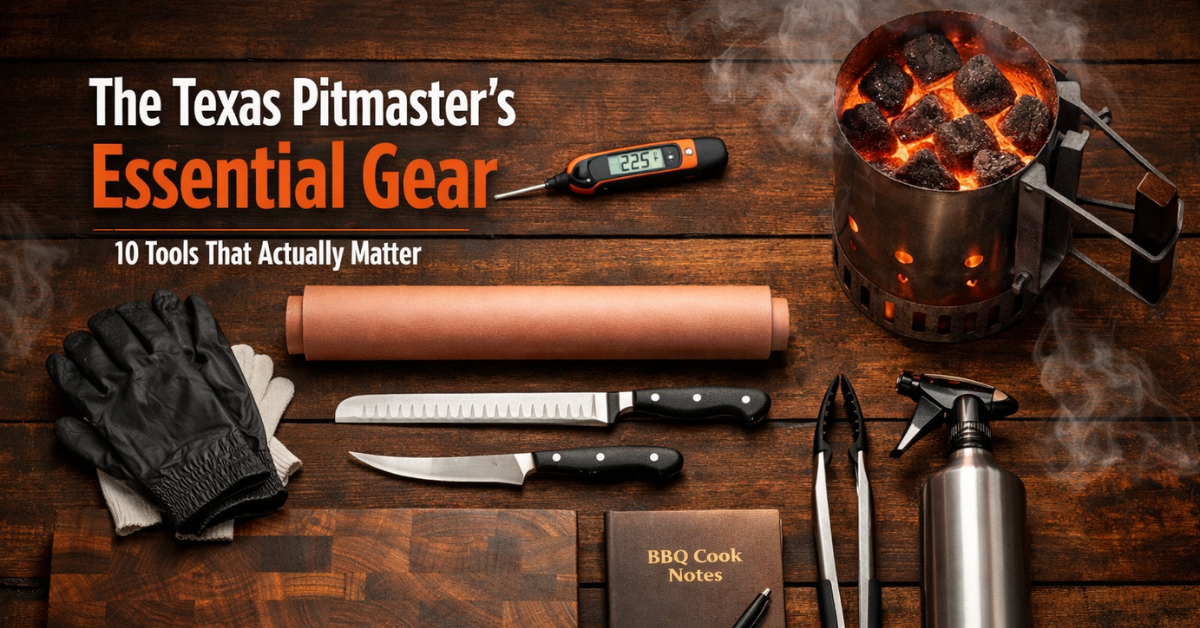
That is where a BBQ cook notebook earns its place.
If you want more consistent brisket, ribs, pork butt, chicken, or turkey, writing down what actually happened during a cook is one of the smartest habits you can build. A good notebook helps turn random wins into repeatable results.
Why a BBQ cook notebook matters
A lot of people think note-taking sounds too serious for backyard BBQ. In reality, it is one of the most practical things you can do.
BBQ is full of moving parts:
- Meat size and grade
- Rub and seasoning choices
- Pit temperature swings
- Weather and wind
- Fuel type and wood choice
- Wrap timing
- Rest time
- Slicing results
- Final texture and flavor
Even when you are cooking the same cut, the cook is never exactly the same twice. A notebook helps you spot patterns that your memory usually misses.
Instead of thinking, “I think that last brisket was better,” you can look back and see exactly what changed.
A cook notebook helps you improve faster
The real value of a BBQ cook notebook is not just record-keeping. It is faster improvement.
When you track cooks consistently, you start answering useful questions:
- Why was this brisket juicier than the last one?
- Why did those ribs get too dark before they got tender?
- Why did that pork butt finish two hours early?
- Why did one wood combination give better color and cleaner smoke?
- Why did a chicken cook turn rubbery even though the internal temp was fine?
Without notes, every cook can start to blur together. With notes, you can troubleshoot like a smarter pitmaster.
What a BBQ cook notebook should include
A good BBQ cook notebook does not need to be complicated. It just needs to capture the details that actually shape the cook.
Meat details
Start with the basics of what you are cooking:
- Cut of meat
- Weight
- Grade or quality level
- Bone-in or boneless
- Brand or source, if useful
- Whether it was trimmed beforehand
This matters because two briskets that look similar can cook very differently.
Prep notes
Write down what happened before the meat ever hit the pit:
- Binder, if used
- Rub or seasoning blend
- Injection or marinade
- Trim style
- Rest time after seasoning
- Refrigerator or room-temp timing
A lot of cooks improve simply because the prep becomes more consistent.
Cooker setup
This is where many people get vague, and it costs them later.
Track:
- Smoker or grill type
- Fuel type
- Wood used
- Water pan or no water pan
- Heat setup, direct or indirect where relevant
- Starting pit temperature
That way, when something works, you know what setup helped create it.
Cook timeline
This is one of the most important sections in the notebook.
Log the key moments:
- Time meat went on
- Pit temps through the cook
- Spritz timing
- Wrap timing
- Internal temperature milestones
- When tenderness started checking right
- Time meat came off
- Rest start and end
You do not need to write every five minutes. Just note the moments that matter.
Final results
This is where the real learning happens.
Write down how it actually turned out:
- Bark
- Smoke flavor
- Tenderness
- Moisture
- Slice quality
- Pull quality, if applicable
- What you would change next time
This section matters more than people think. A cook notebook is not just a timeline. It is a feedback loop.
What to track for brisket cooks
Brisket is one of the best reasons to keep a notebook because there are so many places a cook can drift.
For brisket, pay close attention to:
- Starting weight and trim level
- Fat cap thickness
- Pit temp range
- Wood type
- When color looked right
- When you wrapped, if you wrapped
- Internal temp when probe tenderness started feeling close
- Total rest time
- How the flat and point turned out separately
- Slice texture and moisture
A lot of brisket problems are not mystery problems. They are pattern problems. A notebook helps you catch them faster.
What to track for ribs
Ribs may cook faster than brisket, but they still benefit from better notes.
Track things like:
- Whether they were spare ribs, St. Louis, or baby backs
- Membrane removed or left on
- Rub used
- Pit temperature range
- Color when you started checking tenderness
- Whether you wrapped
- Bend test or toothpick feel
- Sauce timing, if any
- Bite texture at the end
If your ribs keep going from underdone to overdone too fast, your notes usually reveal where that shift is happening.
What to track for pork butt and pulled pork
Pork butt is forgiving, but that does not mean it is automatic.
Useful things to write down:
- Weight
- Bone-in or boneless
- Rub and binder
- Wood choice
- Stall timing
- Wrap timing
- Internal temp range when it felt done
- Rest and hold time
- Pull texture
- Bark distribution
- Moisture after pulling
This is especially helpful if one butt pulled beautifully and the next one felt tighter or drier.
What to track for chicken and turkey
Poultry is where a lot of cooks think they can “just wing it,” and that is usually where notebook habits help most.
Track:
- Whole bird or parts
- Skin-on or skinless
- Brine or no brine
- Rub and oil or binder
- Cooker temp
- Skin texture
- Pull temp
- Rest time
- Juiciness and bite-through quality
Chicken and turkey benefit from tighter note-taking because texture changes quickly when you miss the sweet spot.
The biggest mistakes a cook notebook helps prevent
A notebook cannot stop every bad cook, but it can prevent the same mistake from happening over and over.
Cooking by memory
Memory is usually too vague to improve with. You remember the outcome, not the path.
Repeating the same mistake without noticing it
A notebook makes recurring problems easier to spot, especially with brisket dryness, rib timing, or pork texture.
Changing too many variables at once
When everything changes, you learn almost nothing. A cook notebook helps you change one or two things at a time and actually measure the difference.
Forgetting what finally worked
This is the most frustrating one. You finally hit a great cook, then cannot fully recreate it because you did not write down enough details.
Paper notebook vs. phone notes
Both can work.
A paper notebook feels more intentional and easier to review over time. A phone note is fast and convenient, especially when you are cooking solo and moving around the pit.
The best option is the one you will actually use consistently.
If your current system is “I will remember it,” that is usually not a system.
How beginners benefit the most
Experienced pitmasters can benefit from a cook notebook, but beginners may benefit even more.
Why? Because new cooks are still learning which details matter. A notebook helps speed that process up.
Instead of feeling like every cook is a fresh guess, you start building your own playbook. That gives you more confidence, better instincts, and fewer repeated mistakes.
You do not need to become obsessive. You just need to become observant.
A good cook notebook turns one good cook into many
That is really the whole point.
Anybody can luck into a good brisket or a great rack of ribs once. The real goal is making those results easier to repeat. A cook notebook gives you a clearer trail back to what worked.
It helps you cook with more intention, troubleshoot with more honesty, and improve without feeling like you are starting from scratch every weekend.
Start building your own BBQ playbook
If you want to cook better BBQ more consistently, start writing your cooks down.
Track the meat, the pit, the fire, the timing, and the result. Keep it simple. Stay honest. Build the habit. Over time, that notebook becomes one of the most useful BBQ tools you own.
And if you want a head start, the ExploringBBQ Cook Notebook is a simple way to organize those details and start learning from every cook instead of just hoping the next one goes better.
And while you are here, check out some of our smoked meat recipes to log your next cook:
- Smoked Brisket Recipe
- Smoked Ribs Recipe
- Pulled Pork Recipe
- Smoked Turkey Recipe
- Smoker Chicken Lollipops